
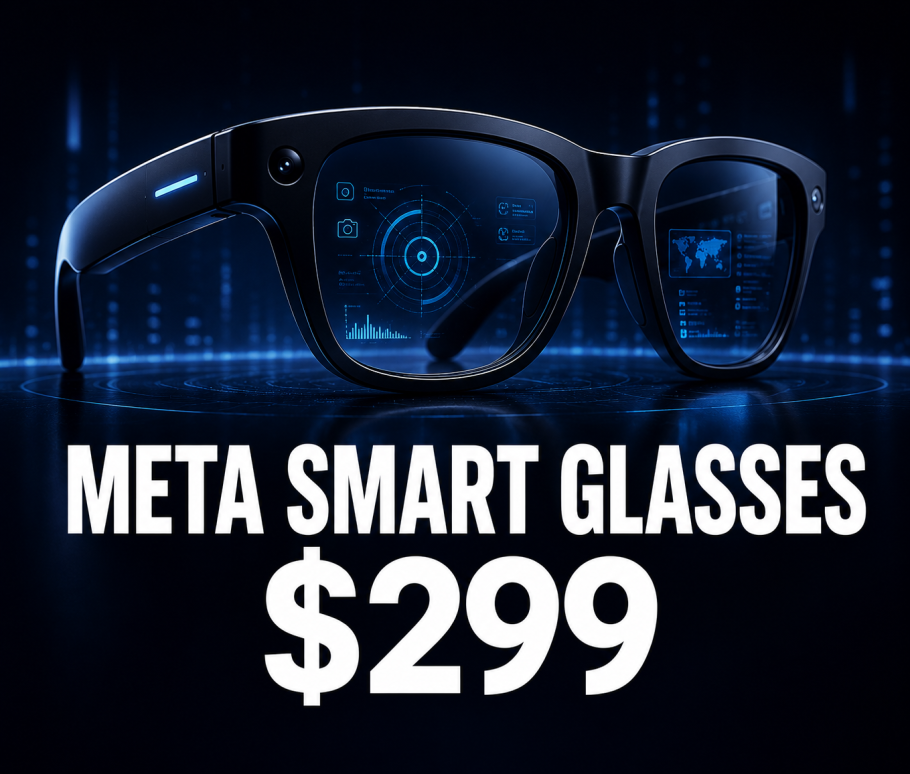
Meta Smart Glasses are making one of their boldest moves yet in the wearable technology race.
The company has officially launched a new generation of Meta Smart Glasses starting at just $299, significantly lowering the barrier to entry for consumers interested in AI-powered wearables. The announcement signals CEO Mark Zuckerberg’s determination to make smart glasses a mainstream product rather than a niche gadget for early adopters.
The launch also intensifies competition in the growing wearable AI market, placing direct pressure on rivals such as Snap, which recently introduced its latest Specs smart glasses.
As artificial intelligence becomes increasingly integrated into everyday devices, Meta is betting that Meta Smart Glasses could become the next major computing platform.
Meta’s Vision for Smart Glasses
For years, Meta has invested heavily in virtual reality, augmented reality, and wearable technologies.
While products such as VR headsets have attracted dedicated users, widespread adoption has remained challenging. Meta Smart Glasses represent a different strategy.
Instead of asking consumers to adopt entirely new computing environments, Meta is focusing on devices that fit naturally into everyday life.
The new Meta Smart Glasses are designed to look and feel much closer to traditional eyewear while offering AI-powered capabilities that enhance daily activities.
According to Meta, the goal is to make AI accessible without requiring users to constantly look at a smartphone screen.
Why the $299 Price Point Matters
Perhaps the most significant aspect of the announcement is the price.
Previous generations of smart glasses often carried premium price tags that limited their appeal to technology enthusiasts.
By introducing a model starting at $299, Meta is attempting to reach a much broader audience with Meta Smart Glasses.
This pricing strategy could help:
- Increase consumer adoption
- Expand the wearable ecosystem
- Encourage developer interest
- Accelerate AI integration into daily life
- Build long-term platform loyalty
The lower price point suggests Meta is prioritizing scale and adoption over short-term hardware profits.
What Can the New Smart Glasses Do?
While specific features vary by model, AI-powered smart glasses generally aim to provide users with hands-free access to information and digital services.
Expected capabilities include:
- Voice-controlled AI assistance
- Real-time information lookup
- Photo and video capture
- Messaging and communication tools
- Navigation assistance
- Translation features
- Content recommendations
The integration of artificial intelligence allows users to interact with technology more naturally through voice and contextual awareness.
This approach reduces the need to constantly switch between the physical world and a smartphone screen.
AI Is Driving the Wearables Revolution
The timing of Meta’s launch is no coincidence.
Artificial intelligence has rapidly become the most important technology trend across the industry.
Companies including OpenAI, Google, Apple, Microsoft, and Anthropic are all investing heavily in AI-powered experiences.
Meta Smart Glasses provide a unique opportunity to bring AI into daily life in a more seamless way.
Instead of opening an app or typing a query, users can simply ask questions and receive assistance while continuing their activities.
Many industry experts believe wearable AI could become one of the next major phases of consumer technology.
Pressure Mounts on Snap
Meta’s announcement also raises the stakes for Snap.
The social media company recently introduced its latest Specs smart glasses as part of its long-term augmented reality strategy.
However, Meta’s aggressive pricing could create significant challenges.
At $299, Meta Smart Glasses become more accessible to mainstream consumers and may attract users who are curious about smart glasses but unwilling to spend premium prices.
The competition between Meta and Snap is likely to accelerate innovation across the entire wearable technology sector.
The Long-Term Goal: Replacing Smartphones?
Some technology leaders believe smart glasses could eventually become the successor to smartphones.
While that future remains uncertain, Meta clearly sees wearables as a critical part of the next computing era.
Meta Smart Glasses offer several potential advantages:
- Hands-free interaction
- Instant AI assistance
- Context-aware information
- Greater convenience
- Reduced screen dependency
Although smartphones are unlikely to disappear anytime soon, wearables could increasingly complement or replace certain tasks currently handled by mobile devices.
Challenges Still Remain
Despite growing excitement, smart glasses face several hurdles before becoming mainstream.
Key challenges include:
- Battery life limitations
- Privacy concerns
- Social acceptance
- Display technology improvements
- User comfort
Consumers will ultimately determine whether Meta Smart Glasses become an everyday accessory or remain a specialized technology category.
The success of Meta’s new device will depend on how effectively it addresses these concerns while delivering meaningful value.
Why This Launch Matters
Meta’s latest release is about more than a new gadget.
It represents a broader industry shift toward ambient computing, where technology becomes less visible and more integrated into everyday experiences.
The combination of AI and wearables is creating new possibilities for how people interact with digital information.
By lowering the price and focusing on accessibility, Meta is attempting to accelerate that transition.
Whether consumers embrace the vision remains to be seen, but the company’s commitment is becoming increasingly clear.
Final Thoughts
Meta Smart Glasses at $299 mark an important step in the evolution of wearable technology.
The lower price point, combined with growing AI capabilities, could help bring smart glasses to a much wider audience than previous generations.
As competition intensifies between Meta, Snap, Apple, and other technology giants, the battle for the future of wearable computing is just beginning.
For now, Meta is making a strong statement: AI-powered glasses are no longer a futuristic concept. The company wants them to become an everyday reality.

- Amazon Drone Delivery to Reach Nearly 500 Cities - August 20, 2026
- Alibaba AI Models Hit 3 Billion Downloads, Overtaking Meta and Google - August 17, 2026
- Google Pixel 11 Unveiled With Gemini at the Centre of the AI Phone War - August 14, 2026


