
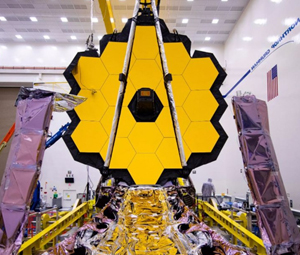

Following the unprecedented and successful launch of the James Webb Space Telescope, or JWST, into space on Christmas Day, NASA revealed some surprising news regarding the telescope’s future: its science mission is likely to endure “significantly more” than 10 years – more than double the project’s minimum length.
JWST was originally expected to be active for 5 to 10 years, but NASA’s newest research discovered that the telescope will likely have enough fuel to sustain scientific activities for much longer. According to NASA, the excess propellant is due to the accuracy of the Ariane 5 rocket that carried the JWST into space. It is also due to the precision of the spacecraft’s first and second mid-course correction adjustments, which were executed in the days following launch, putting it on a route toward its destination a million miles from Earth.
According to NASA, the accuracy of these adjustments allows the spacecraft to expend more fuel to retain its ultimate position for studying the universe. However, the space agency warns that “many factors” might eventually influence JWST’s longevity.

- OpenAI Unveils ChatGPT Atlas: The AI Browser - October 22, 2025
- The New Dr. Google is in: Here’s How to Use it Wisely - October 15, 2025
- Leadership in the AI Era: 5 Skills That Drive Real Impact - October 8, 2025


