
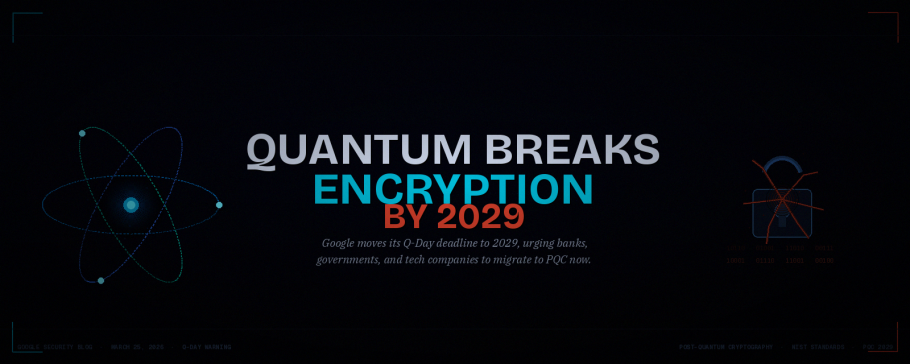
The Google Q-Day warning has brought new urgency to the future of cybersecurity. According to Google, quantum computers could break today’s encryption standards as early as 2029. This timeline is significantly earlier than previous estimates and signals a critical shift for businesses, governments, and technology leaders.
For years, quantum threats were considered distant. Now, the countdown has effectively begun, leaving organizations with only a few years to prepare.
What Is Q-Day and Why It Matters
Q-Day refers to the point when a quantum computer becomes powerful enough to break widely used encryption methods such as RSA and elliptic curve cryptography. These systems protect everything from online banking and emails to digital signatures and secure communications.
Once Q-Day arrives, encrypted data secured by traditional methods could become vulnerable. This is especially concerning because sensitive data transmitted today could be exposed in the future.
The Real Risk: Store Now, Decrypt Later
One of the biggest concerns highlighted in the Google Q-Day warning is the “store now, decrypt later” strategy. Cyber attackers can collect encrypted data today and store it until quantum computers are capable of decrypting it.
This means confidential data such as financial records, healthcare information, and government communications may already be at risk. Even if systems are secure today, the long-term exposure remains a serious threat.
Why Google Moved the Timeline
Google has been working on post-quantum cryptography since 2016. The company now believes advances in quantum hardware, error correction, and algorithm efficiency have accelerated the timeline.
Previously, agencies like the National Security Agency set 2031 as a target for adopting quantum-safe encryption. Google’s updated 2029 estimate suggests that waiting until then may be too late.
This shift puts pressure on organizations to act immediately rather than delay migration plans.
Industries Most at Risk
Not all sectors face the same level of risk, but some are more exposed than others:
- Financial services: Secure transactions and global payment systems
- Government and defense: Classified communications and intelligence data
- Healthcare: Long-term storage of patient records
- Blockchain and crypto: Digital signatures used in transactions
- Enterprise IT: Authentication systems and secure communications
Industries that rely heavily on encryption and store sensitive data for long periods must prioritize action.
The Solution: Post-Quantum Cryptography
The good news is that solutions already exist. The National Institute of Standards and Technology finalized post-quantum cryptography standards in 2024. These include algorithms designed to resist quantum attacks.
Companies can begin transitioning to these new standards to protect their systems against future threats. However, the challenge lies in implementation, not availability.
What Organizations Should Do Now
To respond effectively to the Google Q-Day warning, organizations should take immediate steps:
- Conduct a full audit of existing cryptographic systems
- Identify high-risk data and prioritize protection
- Begin adopting quantum-resistant algorithms
- Upgrade authentication and digital signature systems first
- Plan hardware updates for systems that cannot be modified
Building flexible systems that allow future cryptographic updates is also critical.
Final Thoughts
The Google Q-Day warning is a clear signal that quantum disruption is closer than expected. With a potential 2029 timeline, organizations no longer have the luxury of waiting.
As Google accelerates its own transition, the message to the industry is simple. Start preparing now or risk falling behind in a quantum-powered future.