
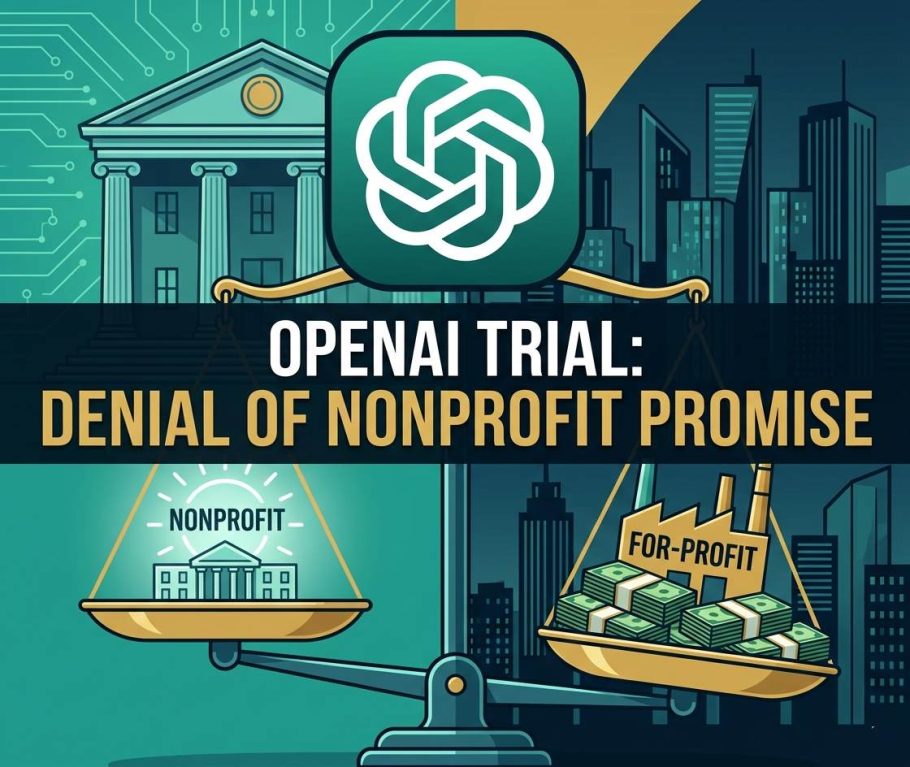
The legal battle between OpenAI and Elon Musk has entered a critical phase, with Sam Altman publicly stating in court that he never promised Musk that OpenAI would remain a nonprofit organization forever. The statement directly challenges one of the central claims in Musk’s lawsuit and could have major consequences for how AI companies are structured in the future.
The trial, now stretching into its third week, is becoming one of the most closely watched legal fights in the technology industry. At the center of the case is a larger question that goes far beyond OpenAI itself: should advanced AI research remain mission-driven and nonprofit-focused, or can it operate successfully under commercial business models while still serving the public interest?
Why Elon Musk Sued OpenAI
Elon Musk was one of OpenAI’s original co-founders and early financial backers when the organization launched in 2015. At the time, OpenAI positioned itself as a nonprofit research lab focused on developing artificial intelligence safely and openly for humanity.
Musk argues that OpenAI moved away from that mission after creating a commercial structure and partnering closely with Microsoft. According to Musk’s legal claims, OpenAI abandoned its original nonprofit principles and shifted toward profit-driven AI development.
Sam Altman’s testimony directly challenges this argument. Altman stated in court that there was never a binding promise that OpenAI would permanently remain nonprofit. He argued that the organization always explored different governance and funding approaches as AI development became more expensive and competitive.
Why This Trial Matters for the AI Industry
The outcome of the case could influence the future structure of AI companies across the industry.
Training advanced AI models now requires enormous investments in:
- Computing infrastructure
- Data centers
- AI chips
- Cloud services
- Research talent
- Energy resources
Very few organizations can fund this level of development without commercial revenue or outside investment. OpenAI’s shift toward a capped-profit structure became one of the first major examples of how AI labs attempt to balance public missions with financial realities.
If Musk’s arguments succeed, it could place pressure on other AI companies that began with public-interest goals but later introduced commercial models.
The case may also influence:
- AI governance frameworks
- Investor relationships
- Nonprofit-to-commercial transitions
- AI safety oversight
- Public trust in AI labs
The Bigger Debate Around AI Governance
The OpenAI trial highlights a growing divide inside the AI industry.
One side argues that advanced AI is too powerful to be controlled primarily by profit incentives. Critics worry that competition for revenue and market dominance could reduce focus on safety, transparency, and long-term risks.
The other side argues that building frontier AI systems is simply too expensive for traditional nonprofit structures. Without large-scale funding and commercial partnerships, companies may struggle to compete globally or advance AI research fast enough.
This debate has become even more intense as AI development accelerates worldwide, especially with growing competition from:
- Google DeepMind
- Anthropic
- Meta
- Microsoft
- xAI
- Chinese AI labs
The pressure to scale AI infrastructure quickly is pushing companies toward larger commercial models.
Microsoft’s Role Adds More Attention
Microsoft’s multibillion-dollar partnership with OpenAI has become a major point of attention throughout the case. Critics argue the partnership transformed OpenAI into a commercially driven company, while supporters say the investment enabled breakthroughs that would otherwise have been impossible.
The partnership also reflects a broader trend in AI where cloud providers, chipmakers, and AI labs are becoming deeply interconnected.
As AI systems become more expensive to build, independent nonprofit research models may become increasingly difficult to sustain without corporate backing.
What Happens Next
The trial is still ongoing, and the final outcome could take months to fully unfold. However, the testimony from Sam Altman marks an important moment because it directly challenges the foundation of Musk’s lawsuit.
Regardless of the verdict, the case is already shaping how the public, investors, and policymakers think about AI governance.
The bigger issue is no longer just about OpenAI versus Elon Musk. It is about whether the future of artificial intelligence will be controlled by nonprofit ideals, commercial incentives, or some hybrid structure that tries to balance both.
As AI becomes more powerful and economically important, this governance question may become one of the defining technology debates of the decade.

- Amazon Drone Delivery to Reach Nearly 500 Cities - August 20, 2026
- Alibaba AI Models Hit 3 Billion Downloads, Overtaking Meta and Google - August 17, 2026
- Google Pixel 11 Unveiled With Gemini at the Centre of the AI Phone War - August 14, 2026


